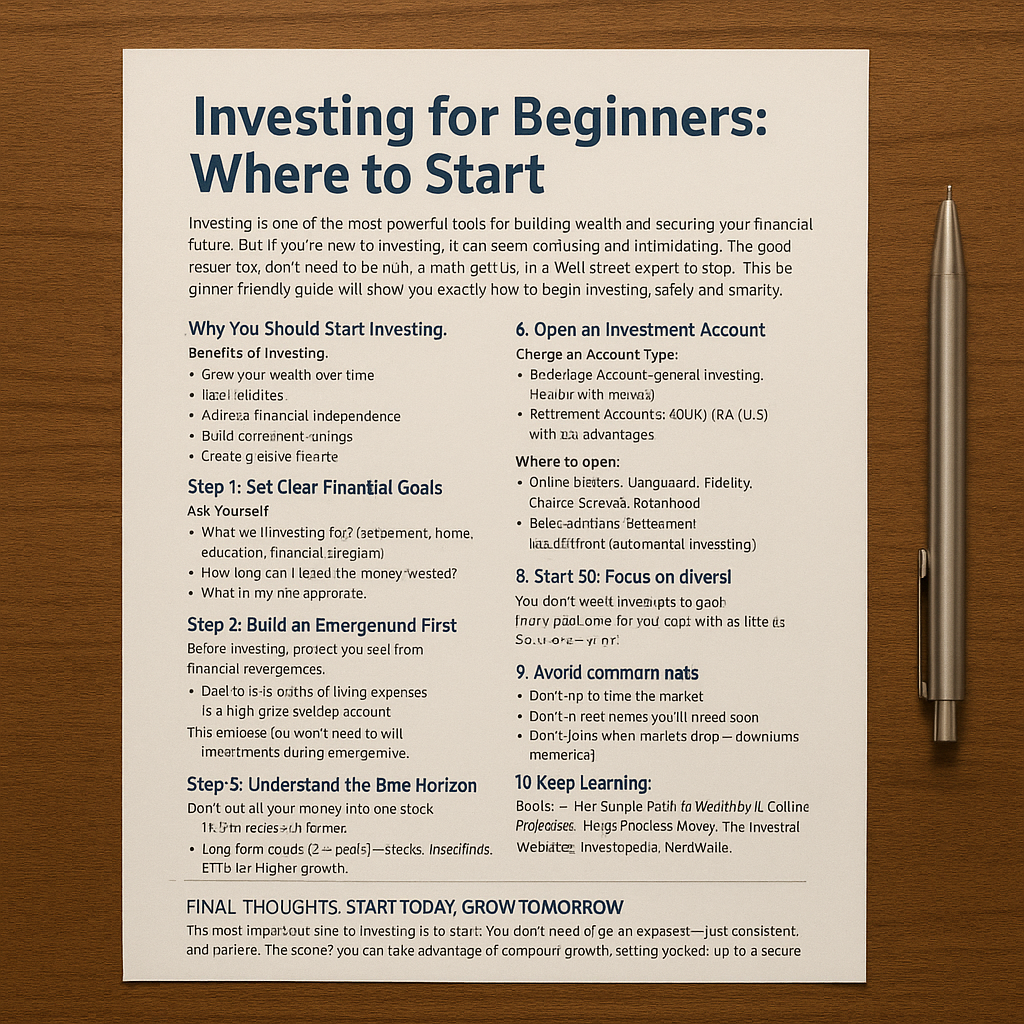
Investing is one of the most powerful tools for building wealth and securing your financial future. But if you’re new to investing, it can seem confusing and intimidating. The good news? You don’t need to be rich, a math genius, or a Wall Street expert to start. This beginner-friendly guide will show you exactly how to begin investing safely and smartly.
Why You Should Start Investing
Benefits of Investing:
- Grow your wealth over time
- Beat inflation
- Achieve financial independence
- Build retirement savings
- Create passive income
The earlier you start, the more time compound interest has to work in your favor.
Step 1: Set Clear Financial Goals
Ask Yourself:
- What am I investing for? (retirement, home, education, financial freedom)
- How long can I leave this money invested?
- What is my risk tolerance?
Goals shape the kind of investments you should choose.
Step 2: Build an Emergency Fund First
Before investing, protect yourself from financial emergencies.
- Save 3–6 months of living expenses in a high-yield savings account.
- This ensures you won’t need to sell investments during emergencies.
Step 3: Understand the Basic Investment Types
1. Stocks
- Buying shares of companies.
- Higher risk, higher potential returns.
2. Bonds
- Loans to companies or governments.
- Lower risk, steady interest payments.
3. Mutual Funds
- Pools of money invested in multiple stocks/bonds.
- Managed by professionals.
4. ETFs (Exchange-Traded Funds)
- Similar to mutual funds but traded like stocks.
- Low fees, diversified, great for beginners.
5. Index Funds
- Track the performance of a market index (like the S&P 500).
- Low cost, diversified, highly recommended for beginners.
Step 4: Open an Investment Account
Choose an Account Type:
- Brokerage Account: General investing (flexible withdrawals).
- Retirement Accounts: 401(k), IRA (U.S.) with tax advantages.
Where to Open:
- Online brokers: Vanguard, Fidelity, Charles Schwab, Robinhood
- Robo-advisors: Betterment, Wealthfront (automated investing)
Step 5: Start Small
You don’t need thousands to start. Many platforms let you start with as little as $5 or $10.
Example Investments:
- Buy shares in an index fund like Vanguard S&P 500 ETF (VOO).
- Use a robo-advisor that builds a diversified portfolio for you.
Step 6: Focus on Diversification
Don’t put all your money into one stock or one sector.
How to Diversify:
- Use index funds or ETFs that cover the entire stock market.
- Combine stocks, bonds, and international assets for balance.
Step 7: Understand Risk and Time Horizon
- Short-term goals (1-3 years): Safer investments like bonds or savings.
- Long-term goals (5+ years): Stocks, index funds, ETFs for higher growth.
The longer you can leave your money invested, the better it can recover from market ups and downs.
Step 8: Avoid Common Mistakes
- Don’t try to time the market.
- Don’t invest money you’ll need soon.
- Don’t panic when markets drop — downturns are normal.
Step 9: Keep Learning
Investing is a lifelong skill.
Great Resources:
- Books: The Simple Path to Wealth by JL Collins
- Podcasts: BiggerPockets Money, The Invested Podcast
- Websites: Investopedia, NerdWallet
Step 10: Be Consistent
Invest regularly — weekly or monthly — regardless of market ups and downs. This strategy, called dollar-cost averaging, reduces risk over time.
Final Thoughts: Start Today, Grow Tomorrow
The most important step in investing is to start. You don’t need to be an expert — just consistent and patient. The sooner you start, the more you can take advantage of compound growth, setting yourself up for a secure and wealthy future.