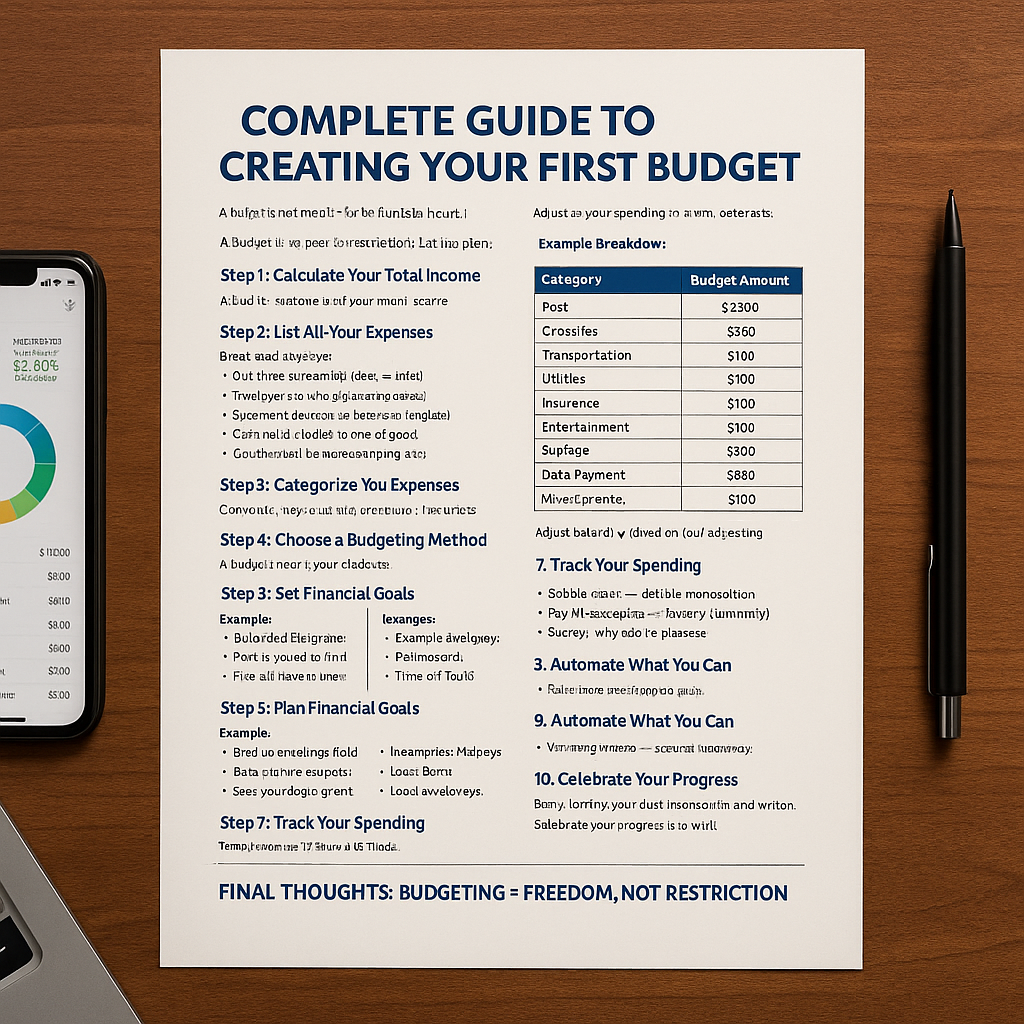
Creating a budget is the foundation of financial stability. Whether you want to pay off debt, save for a goal, or simply stop living paycheck to paycheck, a well-crafted budget puts you in control of your money. This guide will walk you step-by-step through creating your first budget successfully.
Why Do You Need a Budget?
A budget is not about restriction. It’s a tool to help you:
- Understand where your money goes
- Avoid overspending
- Save for emergencies and goals
- Reduce financial stress
- Plan for the future
Step 1: Calculate Your Total Income
What Counts as Income?
- Full-time or part-time job salaries (after taxes)
- Freelance or side gig earnings
- Passive income (rent, dividends, royalties)
- Government benefits or child support
👉 Use your average monthly income if your earnings fluctuate.
Step 2: List All Your Expenses
Break your expenses into two main categories:
Fixed Expenses (same every month)
- Rent or mortgage
- Utilities
- Insurance
- Car payments
- Subscriptions (Netflix, Spotify, etc.)
Variable Expenses (change monthly)
- Groceries
- Dining out
- Gas/transportation
- Entertainment
- Shopping
Periodic Expenses
- Annual insurance payments
- Car maintenance
- Gifts/holidays
👉 Tip: Review your bank statements from the last 2–3 months to catch everything.
Step 3: Categorize Your Expenses
Group your spending into manageable categories:
- Needs: housing, utilities, groceries, insurance
- Wants: dining out, entertainment, hobbies
- Savings/Debt Payments: emergency fund, investments, extra debt payments
Step 4: Choose a Budgeting Method
Popular Methods:
- 50/30/20 Rule:
- 50% Needs
- 30% Wants
- 20% Savings/Debt Repayment
- Zero-Based Budget:
- Every dollar has a job.
- Income – Expenses = 0 at the end of the month.
- Envelope System (Cash Budgeting):
- Assign cash to different categories.
- Spend only what’s in each envelope.
Choose the one that fits your lifestyle best.
Step 5: Set Financial Goals
A budget should reflect your goals.
Examples:
- Build an emergency fund
- Pay off $5,000 in credit card debt
- Save $3,000 for a vacation
- Invest 10% of your income
Set SMART goals: Specific, Measurable, Achievable, Relevant, and Time-bound.
Step 6: Plan Your Monthly Budget
Example Breakdown:
| Category | Budget Amount |
|---|---|
| Rent | $1,200 |
| Groceries | $400 |
| Transportation | $150 |
| Utilities | $100 |
| Insurance | $100 |
| Entertainment | $100 |
| Savings | $300 |
| Debt Payment | $250 |
| Miscellaneous | $100 |
Adjust based on your income and priorities.
Step 7: Track Your Spending
Tools to Use:
- Apps: Mint, YNAB, Goodbudget, PocketGuard
- Spreadsheets (Google Sheets, Excel)
- Pen and paper notebook
Track daily or weekly to avoid surprises at the end of the month.
Step 8: Review and Adjust
Budgets are living documents. Each month:
- Review your spending
- Adjust categories as needed
- Look for areas to cut back
- Add more to savings or debt payoff when possible
Step 9: Automate What You Can
Set up:
- Automatic bill payments
- Automatic transfers to savings or investment accounts
Automation reduces stress and ensures consistency.
Step 10: Celebrate Your Progress
Every month you stick to your budget is a win. Celebrate by:
- Treating yourself (within budget)
- Watching your savings grow
- Seeing your debt shrink
Final Thoughts: Budgeting = Freedom, Not Restriction
A budget is a plan for your money, not a punishment. When you control your money, you control your future. Whether your goal is to get out of debt, travel, buy a home, or retire early, it all starts with a budget. The first one may feel imperfect — that’s okay. Keep adjusting, learning, and moving forward.