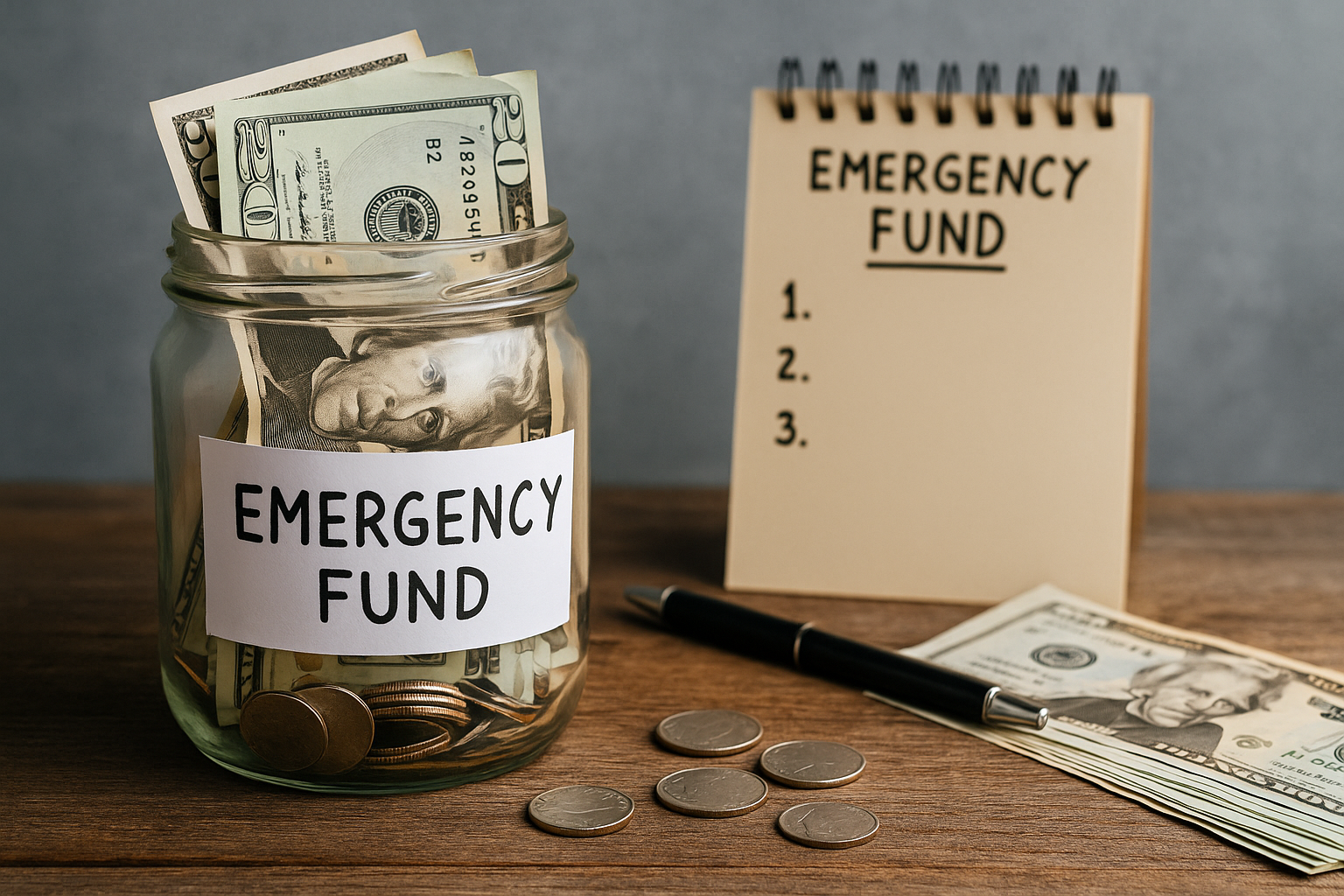
An emergency fund is your financial safety net — a buffer between you and life’s unexpected events. Whether it’s a job loss, car repair, medical emergency, or urgent home repair, having money set aside keeps you from relying on credit cards or loans. This guide shows you exactly how to build an emergency fund, step by step.
Why You Need an Emergency Fund
Common Emergencies:
- Medical bills
- Car repairs
- Job loss
- Home maintenance
- Family emergencies
Without a fund, these events can push you into debt and financial stress.
How Much Should You Save?
Starter Emergency Fund:
- Goal: $500 to $1,000
- Covers minor emergencies and prevents debt use.
Full Emergency Fund:
- Goal: 3–6 months of living expenses.
- Example: If your monthly expenses are $2,000, save $6,000–$12,000.
Step 1: Calculate Your Essential Monthly Expenses
Include:
- Rent/mortgage
- Utilities
- Food
- Transportation
- Insurance
- Minimum debt payments
Multiply this by 3–6 months for your target.
Step 2: Open a Separate Savings Account
Why Separate?
- Prevents accidental spending.
- Keeps your emergency fund clearly defined.
Look for a high-yield savings account — safe, accessible, and earning interest.
Step 3: Start Small and Be Consistent
- Begin with $10, $20, or $50 per paycheck.
- Automate transfers to your emergency fund.
- Consistency matters more than amount.
Step 4: Find Extra Money to Boost Savings
Cut Expenses:
- Cancel unused subscriptions.
- Cook at home instead of eating out.
- Reduce unnecessary shopping.
Increase Income:
- Freelance gigs
- Sell unused items
- Part-time work or side hustle
Step 5: Use Windfalls Wisely
Any extra money should go directly to your emergency fund:
- Tax refunds
- Bonuses
- Gifts
- Cash rebates
Step 6: Track Your Progress
Visual tools help maintain motivation:
- Use savings apps with progress trackers.
- Draw a savings thermometer or chart on paper.
- Celebrate milestones (first $500, then $1,000, etc.).
Step 7: Only Use for True Emergencies
A true emergency is:
- Unexpected
- Necessary
- Urgent
Not emergencies:
- Vacations
- Shopping deals
- Upgrading electronics
Step 8: Replenish After Use
If you withdraw from the emergency fund:
- Prioritize rebuilding it.
- Resume automatic contributions immediately.
Step 9: Adjust as Life Changes
Life changes = fund needs change:
- Moving to a more expensive area
- Having children
- Taking on a mortgage
- Changing jobs
Recalculate your target when major changes occur.
Step 10: Maintain It Long-Term
- Keep the habit of saving alive even after reaching your goal.
- Shift excess savings to investments for growth after the fund is full.
Final Thoughts: Your Emergency Fund = Peace of Mind
An emergency fund is one of the smartest financial decisions you can make. It’s not about if emergencies happen — it’s when. By having money set aside, you protect your future self from stress, debt, and hardship. Start small, stay consistent, and enjoy the peace of mind that comes with financial security.