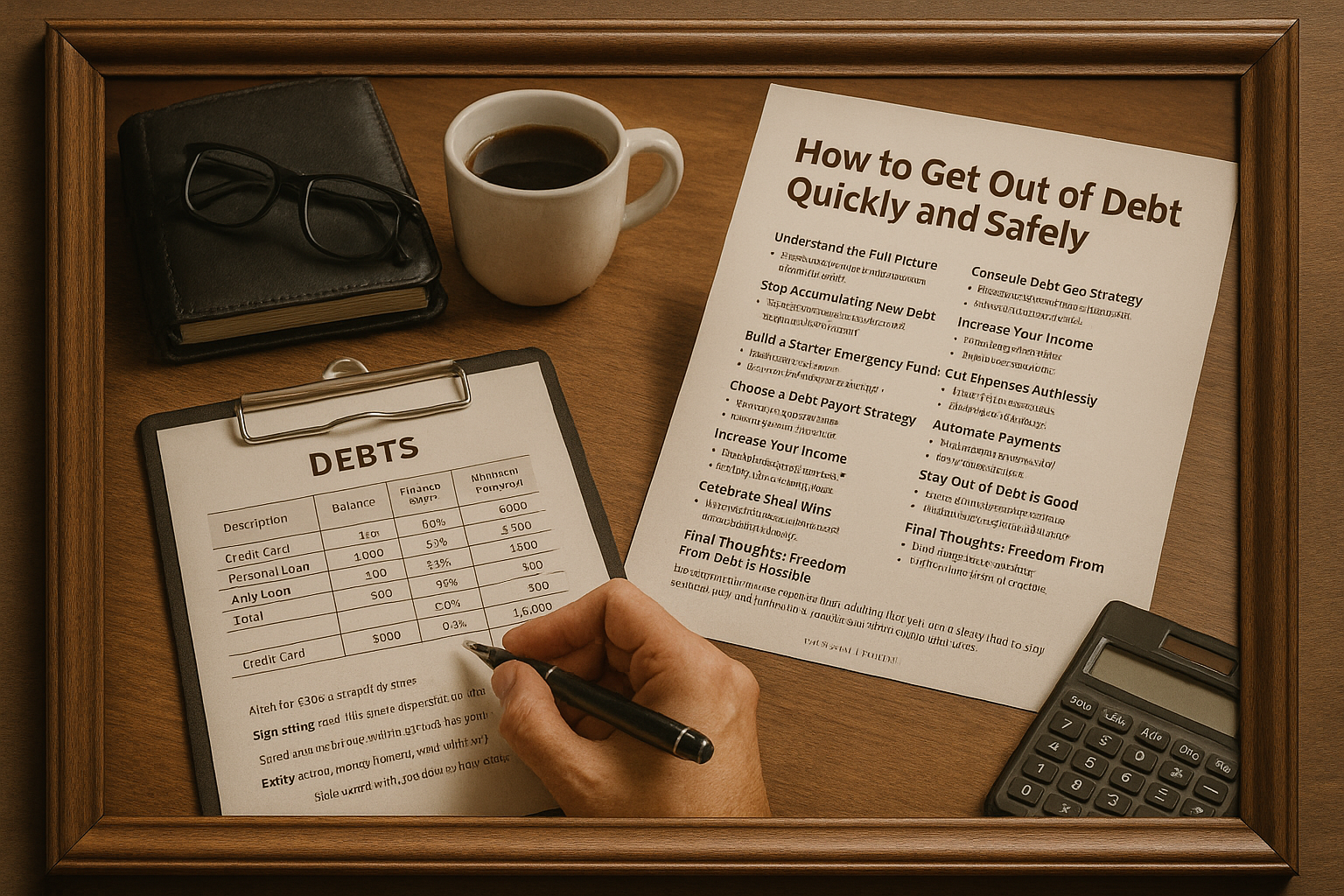
Being in debt can feel overwhelming, stressful, and even hopeless. However, no matter how deep your debt may seem, there are proven strategies to help you regain control of your finances, pay off what you owe, and secure a debt-free future. In this guide, you’ll learn practical steps to get out of debt quickly and safely.
Understand the Full Picture of Your Debt
List All Your Debts
Start by gathering all your debt information. This includes:
- Credit cards
- Personal loans
- Auto loans
- Student loans
- Medical bills
- Any other outstanding balances
Organize Key Details:
- Total balance for each debt
- Minimum monthly payment
- Interest rate (APR)
Having a clear picture of what you owe is the first critical step in creating a payoff strategy.
Stop Accumulating New Debt
It’s impossible to get out of debt if you continue adding more. Commit to:
- Stop using credit cards temporarily.
- Avoid new loans or financing.
- Switch to a cash-only or debit-only spending plan.
This change helps you stabilize while you focus on reducing your debt.
Build a Starter Emergency Fund
Surprisingly, one of the first steps in getting out of debt is saving a small emergency fund.
Why Save While Paying Off Debt?
- Prevents you from falling back into debt when unexpected expenses arise.
- Provides peace of mind during the debt repayment journey.
How Much?
- Aim for $500 to $1,000 as a starter emergency fund.
Choose a Debt Payoff Strategy
Two highly effective methods are commonly used:
1. Debt Snowball Method
- Focus on paying off the smallest debt first.
- Make minimum payments on all others.
- Once the smallest is paid off, roll that payment into the next smallest.
Pros: Builds motivation with quick wins.
2. Debt Avalanche Method
- Focus on the debt with the highest interest rate.
- Make minimum payments on the rest.
- Once it’s paid, tackle the next highest interest debt.
Pros: Saves more money on interest in the long run.
Negotiate Better Terms
You might be able to lower your debt burden by negotiating:
- Lower interest rates: Call your lenders and ask for a reduction based on your payment history.
- Debt consolidation: Combine multiple debts into one loan with a lower interest rate.
- Settlement offers: For certain debts, especially collections, creditors might accept less than the full balance.
Increase Your Income
The faster you can generate extra money, the faster your debt disappears.
Options to Increase Income:
- Freelance work (writing, graphic design, virtual assistance)
- Gig economy jobs (Uber, DoorDash, TaskRabbit)
- Sell unused items online (eBay, Facebook Marketplace)
- Part-time job or side hustle
Every extra dollar should go directly to debt payments.
Cut Expenses Ruthlessly
Look for immediate savings by reducing:
- Dining out and takeout
- Entertainment subscriptions
- Shopping and impulse purchases
- Luxury services (salon, streaming, gym if not used)
- Utility bills by being energy efficient
Redirect all saved money toward your debts.
Automate Payments
Set up automatic payments to ensure:
- Minimums are always paid on time (avoiding late fees).
- Extra payments are applied to your targeted debt.
This removes mental load and helps you stay consistent.
Celebrate Small Wins
Debt repayment is a marathon, not a sprint. Celebrate each debt you pay off:
- A small treat (within budget)
- A special meal at home
- A no-cost reward like a day off from side hustles
This boosts motivation for the long journey ahead.
Stay Out of Debt for Good
Once you’re debt-free, the next challenge is to stay that way.
Key Steps:
- Continue budgeting and tracking expenses.
- Maintain and grow your emergency fund (3–6 months of expenses).
- Invest for the future.
- Use credit cards only if you pay them off in full every month.
Final Thoughts: Freedom From Debt Is Possible
Escaping debt isn’t just a financial goal — it’s a life transformation. The stress lifts, opportunities open, and you gain true financial freedom. Whether you choose the debt snowball, avalanche, or a hybrid approach, the key is commitment, consistency, and believing that you can change your financial life.