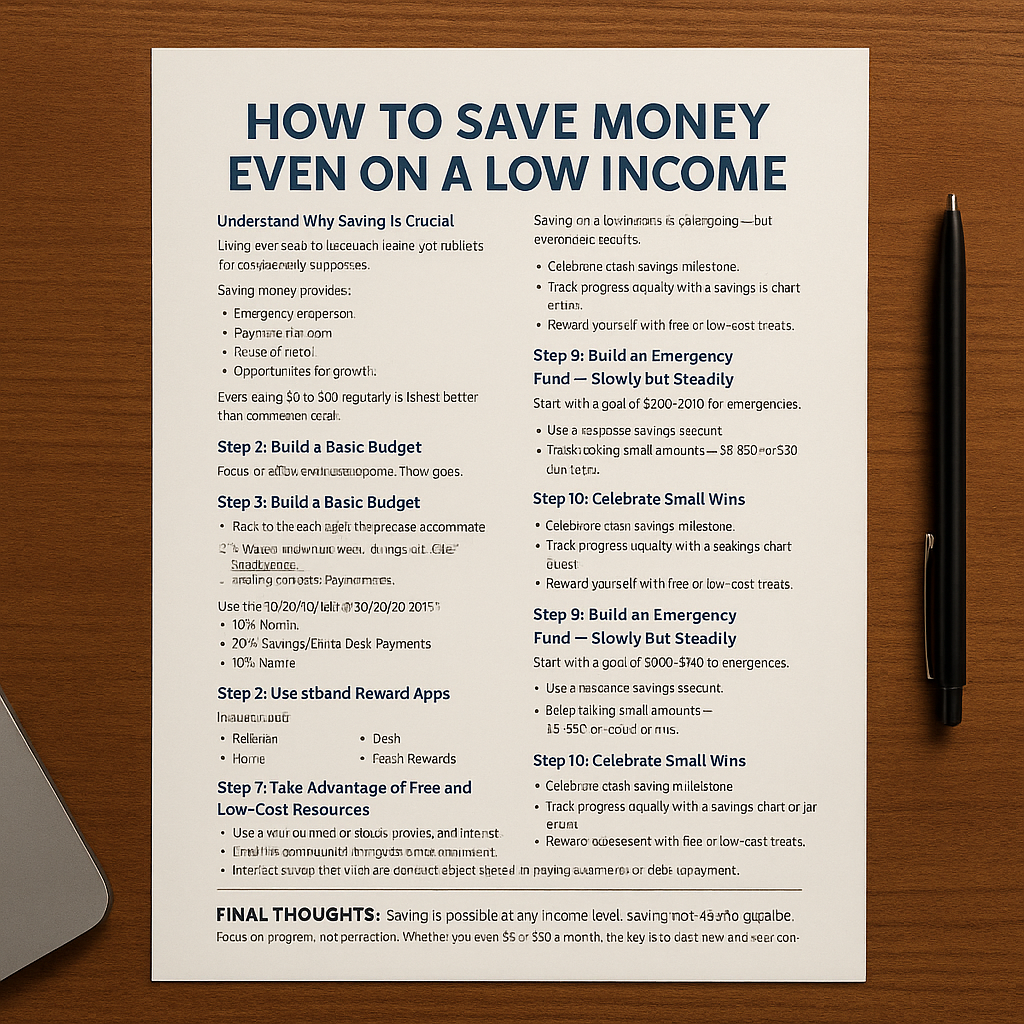
Saving money when you’re living on a low income may seem impossible — but it’s absolutely achievable with the right strategies. Even small amounts saved consistently can lead to significant financial security over time. This guide will show you how to save money, no matter how much you earn.
Understand Why Saving Is Crucial
Living paycheck to paycheck leaves you vulnerable to unexpected expenses. Saving money provides:
- Emergency protection
- Financial freedom
- Peace of mind
- Opportunities for growth
Even saving $5 to $20 regularly is better than nothing.
Step 1: Track Every Dollar
Start by understanding where your money goes.
How to Track:
- Use budgeting apps like Mint, Goodbudget, or YNAB.
- Keep a daily spending journal.
- Review your bank statements.
This helps identify wasteful spending and hidden leaks.
Step 2: Build a Basic Budget
Focus on Three Main Categories:
- Needs: Rent, utilities, food, transportation
- Wants: Entertainment, dining out, subscriptions
- Savings/Debt Payments: Emergency fund, investments, debt reduction
Use the 70/20/10 Rule if 50/30/20 doesn’t fit:
- 70% Needs
- 20% Savings/Extra Debt Payments
- 10% Wants
Adjust based on your priorities.
Step 3: Pay Yourself First
Treat saving like a bill.
How:
- Set up an automatic transfer right after you get paid.
- Even if it’s just $10, consistency is what matters.
This removes the temptation to spend money you intend to save.
Step 4: Slash Your Fixed Expenses
Look for ways to reduce recurring costs:
- Move to a cheaper apartment or consider a roommate.
- Shop for cheaper insurance rates.
- Cancel unused subscriptions.
- Negotiate internet or phone bills.
Every dollar saved on fixed expenses increases your ability to save.
Step 5: Cut Variable Expenses
Small, everyday choices make a big difference.
Ideas:
- Cook meals at home.
- Meal prep to avoid expensive takeout.
- Buy groceries in bulk or on sale.
- Use public transport instead of owning a car (if possible).
- Shop at thrift stores for clothing and household goods.
Step 6: Use Cashback and Reward Apps
Helpful Apps:
- Rakuten
- Ibotta
- Dosh
- Fetch Rewards
These tools offer cashback or points on everyday purchases.
Step 7: Take Advantage of Free and Low-Cost Resources
- Use public libraries for books, movies, and internet.
- Find free community events for entertainment.
- Exercise using free YouTube workout videos instead of paying for a gym.
Step 8: Increase Your Income (If Possible)
When expenses are already tight, boosting your income can accelerate savings.
Options:
- Freelance work (writing, graphic design, tutoring)
- Gig economy (Uber, DoorDash, TaskRabbit)
- Sell items you no longer use
- Offer services like babysitting, cleaning, or lawn care
Step 9: Build an Emergency Fund — Slowly but Steadily
Start with a goal of $500–$1,000 for emergencies.
- Use a separate savings account.
- Keep adding small amounts — $5, $10, or $20 at a time.
Once the emergency fund is in place, focus on bigger goals like investing or debt repayment.
Step 10: Celebrate Small Wins
Saving on a low income is challenging — but every step counts.
- Celebrate each savings milestone.
- Track progress visually with a savings chart or jar.
- Reward yourself with free or low-cost treats.
Final Thoughts: Saving Is Possible at Any Income Level
Saving money when you earn less requires creativity, discipline, and patience — but it’s absolutely doable. Focus on progress, not perfection. Whether you save $5 or $50 a month, the key is to start now and stay consistent. Over time, you’ll build financial security and open doors to a better future.